In mid-October, South Korea’s National Tax Service (NTS) officially opens the Year-End Tax Settlement Preview (연말정산 미리보기) service on Hometax.
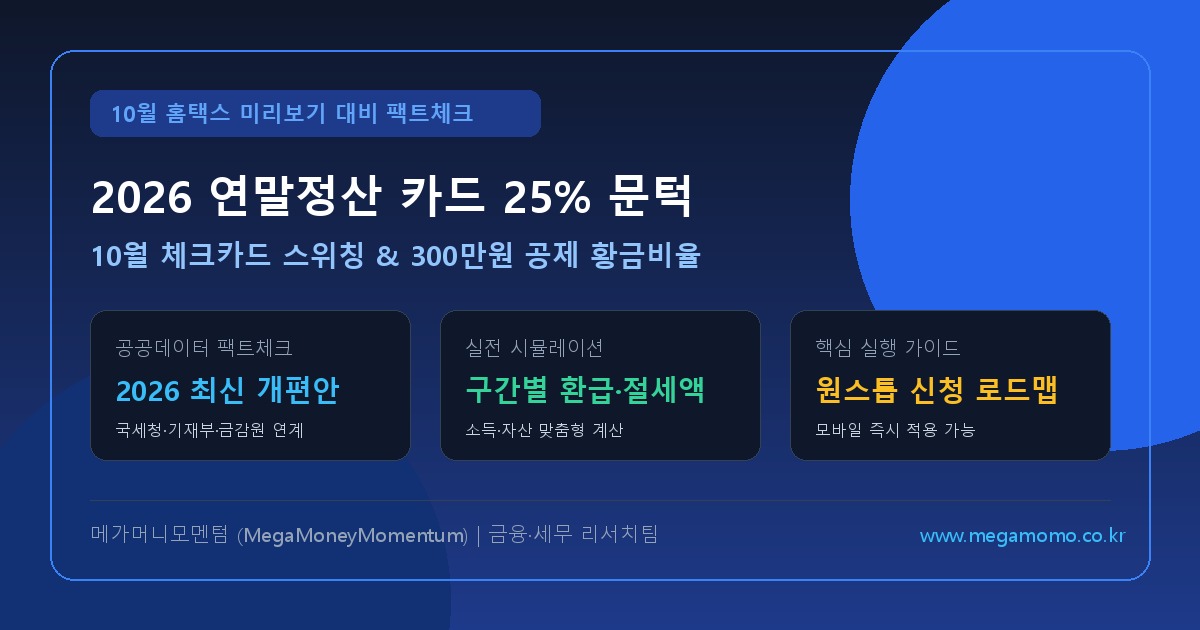
The Korean card expense deduction operates under a unique two-stage rule: Zero deduction until total card expenditure surpasses 25% of your gross annual salary, followed by differential deduction rates (15% for credit cards vs 30% for debit/check cards and cash receipts).
Here is how wage earners and expats in Korea can optimize their payment mix in Q4 to maximize February cash tax refunds.
💡 3-Minute Smart BriefExecutive Summary for Wage Earners
📌 4 Key Facts:
- 25% Threshold Rule: For a worker earning ₩50 million, the first ₩12.5 million spent provides ₩0 in tax deduction. Use high-reward credit cards up to this mark.
- Q4 Debit Switching: Once the 25% threshold is cleared from Jan-Sept spending, switch all October-December expenditures to Check/Debit Cards (30%) and Traditional Markets (40%).
- Dual-Income Couples: Concentrate spending on the lower-earning spouse if struggling to cross the 25% threshold, or on the higher-earning spouse if easily exceeded.
- Excluded Expenses: Utilities, apartment maintenance fees, public taxes, and foreign currency transactions do not qualify for card tax deductions.
1. Deduction Rates by Payment Instrument
Under Article 126-2 of the Restriction of Special Taxation Act:
| Payment Method | Deduction Rate | Statutory Limit |
|---|---|---|
| Credit Card | 15% | Basic ₩3.0M cap (salary ≤ ₩70M) |
| Check / Debit Card | 30% | Twice the efficiency of credit cards |
| Traditional Markets | 40% - 80% | Additional ₩1M-₩2M separate allowance |
2. Action Plan for October
- Check Year-to-Date Spend on Hometax: Verify whether you have surpassed the 25% gross salary threshold.
- Switch Daily Cards to Debit: For grocery shopping and dining out, switch default mobile pay cards to Korean debit cards.